
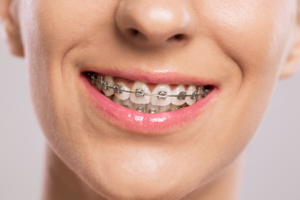
Starting orthodontic treatment is an exciting step toward a healthier, more confident smile, but if you’re new to braces, you’ve probably already discovered that the journey comes with some discomfort—mainly in the form of small oral sores. While this issue is common and rarely ends up being serious, it can still make things like eating, speaking, and smiling more difficult. Fortunately, with the right habits, you can minimize their impact and keep your smile feeling its best as it’s being straightened! Here’s what you need to keep in mind.
Why Do Braces Cause Oral Sores?
Braces introduce new hardware into your mouth, including brackets, wires, and elastic bands, that your cheeks, lips, and tongue simply aren’t used to. In the early weeks, the inside of your mouth is essentially learning to coexist with these new appliances. The metal components of your braces may rub against soft tissue, creating friction that leads to irritation, redness, and small ulcers. The wires can also poke outward or sit at new angles, creating fresh pressure points along the way.
It’s also possible for patients with braces to develop canker sores. These are small ulcers that aren’t necessarily caused by friction, but often stress or hormonal changes, as well as eating certain foods. It just so happens that patients with braces tend to experience canker sores more often! It’s also possible to accidentally bite the inside of your mouth while wearing braces, which may cause irritation.
Tips for Preventing Oral Sores with Braces
- Use orthodontic wax – This is one of the best ways of alleviating (and preventing) oral sores. It creates a smooth barrier between your braces and the soft tissues inside your mouth. Your orthodontist can provide you with some, or you can easily purchase it at most grocery stores and pharmacies.
- Stay on top of your oral hygiene – When food particles linger around the teeth and gums, they create an environment favorable for oral sores and infections. Clean teeth and gums heal faster, so it’s in your best interest to brush after every meal and floss daily. It also helps to rinse with warm salt water.
- Watch what you eat – Crunchy, hard, or sharp foods can poke and scrape the inside of your mouth. Follow your dietary guidelines closely throughout your orthodontic treatment to protect your braces from damage and your mouth’s interior from uncomfortable sores.
If your braces appear to be damaged and are causing irritation inside your mouth, don’t hesitate to let your orthodontist know at once. Not only can they address the source of your discomfort, but they can also keep your treatment moving along as planned!
About the Practice
Under the leadership of Dr. Sam Alkhoury, who is a member of the esteemed American Academy of Orthodontics, our team has served the orthodontic needs of patients in Ludlow for several years. We offer a variety of services for patients of all ages, including tried-and-true traditional braces. If you have any questions about the blog or you need to schedule an appointment, you can call or visit online for more information. Telephone: (413) 613-4663.